

Problem Statement
Managing Corporate Travel and Expenses Overview:
A company of medium size with branches across the world requires its employees to travel for various reasons, such as visiting other branches, attending sales meetings, conferences, and so on. So far, they have relied on an internal travel desk that organizes these trips.
The travel desk also approves per diems and trip budgets based on the traveller’s level of employment, so a level 1 employee would need permission from his/her manager to travel in business class instead of economy; and a manager’s bookings would not need any permissions.
The company wants to enable their employees to book their own travel with minimal involvement from the travel desk, since the internal travel desk is overwhelmed with travel requests. Considering only flight and hotel bookings, come up with a solution for the company to allow their employees to communicate their travel plans to their manager for approval and inform the travel desk.
Exercise: How would you tackle this problem using Design Thinking?

Challenge
The company wants to enable their employees to book their own travel with minimal involvement from the travel desk, since the internal travel desk is overwhelmed with travel requests. Considering only flight and hotel bookings, come up with a solution for the company to allow their employees to communicate their travel plans to their manager for approval and inform the travel desk.
Solution
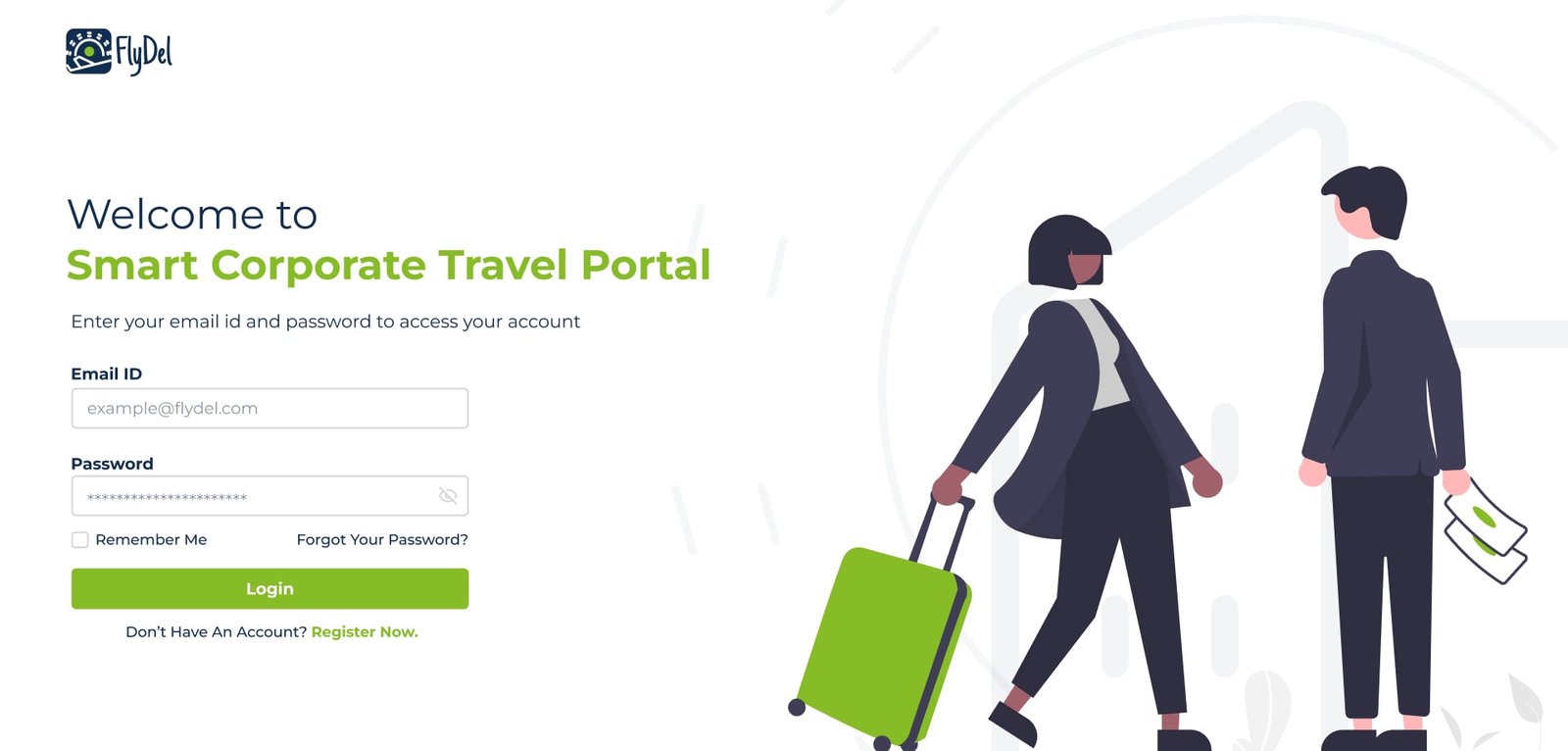
Smart Corporate Travel Portal
Design Thinking enabled us to humanize the travel process, align with business goals, and build a scalable solution that benefits everyone involved.
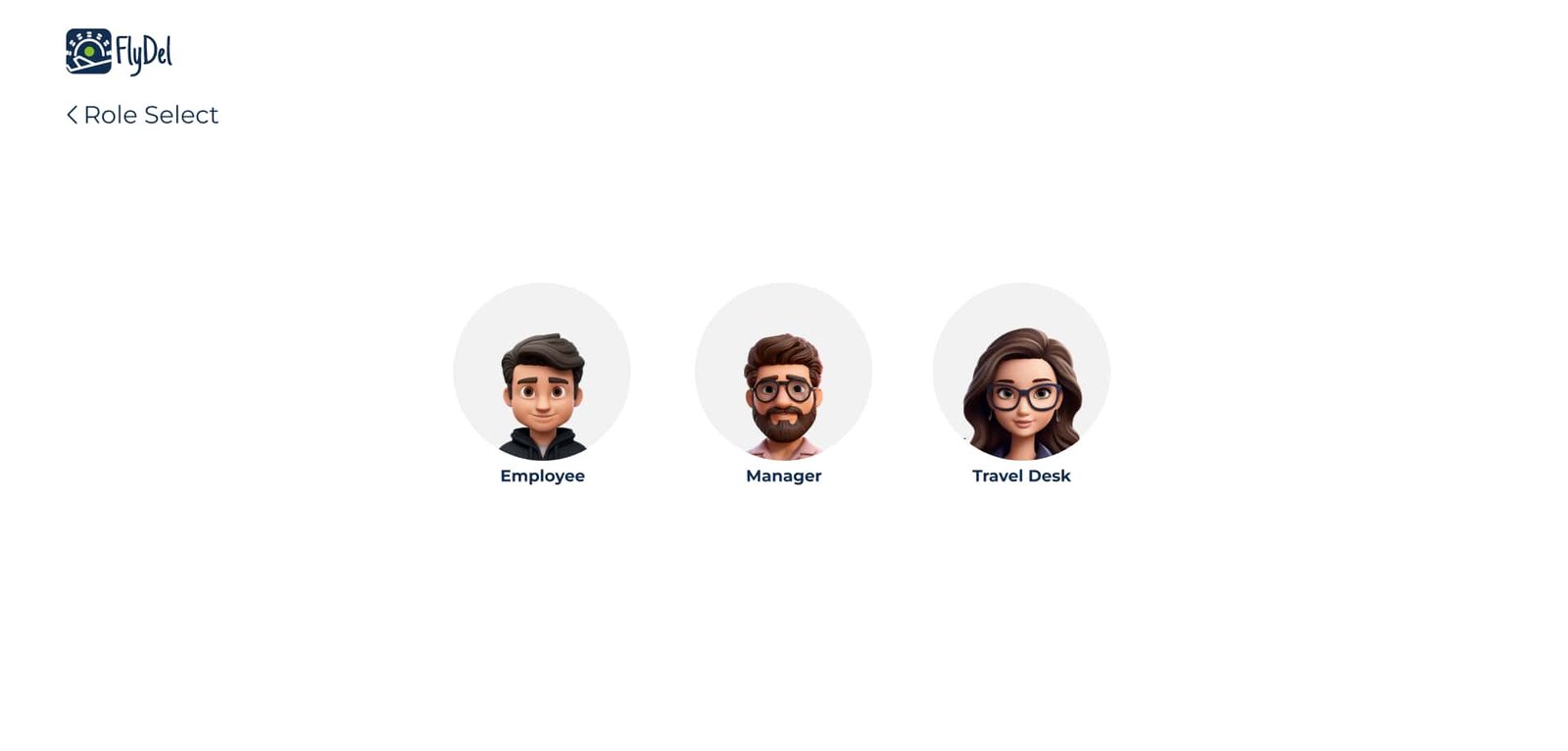
- Role-based booking permissions
- Automated manager approval
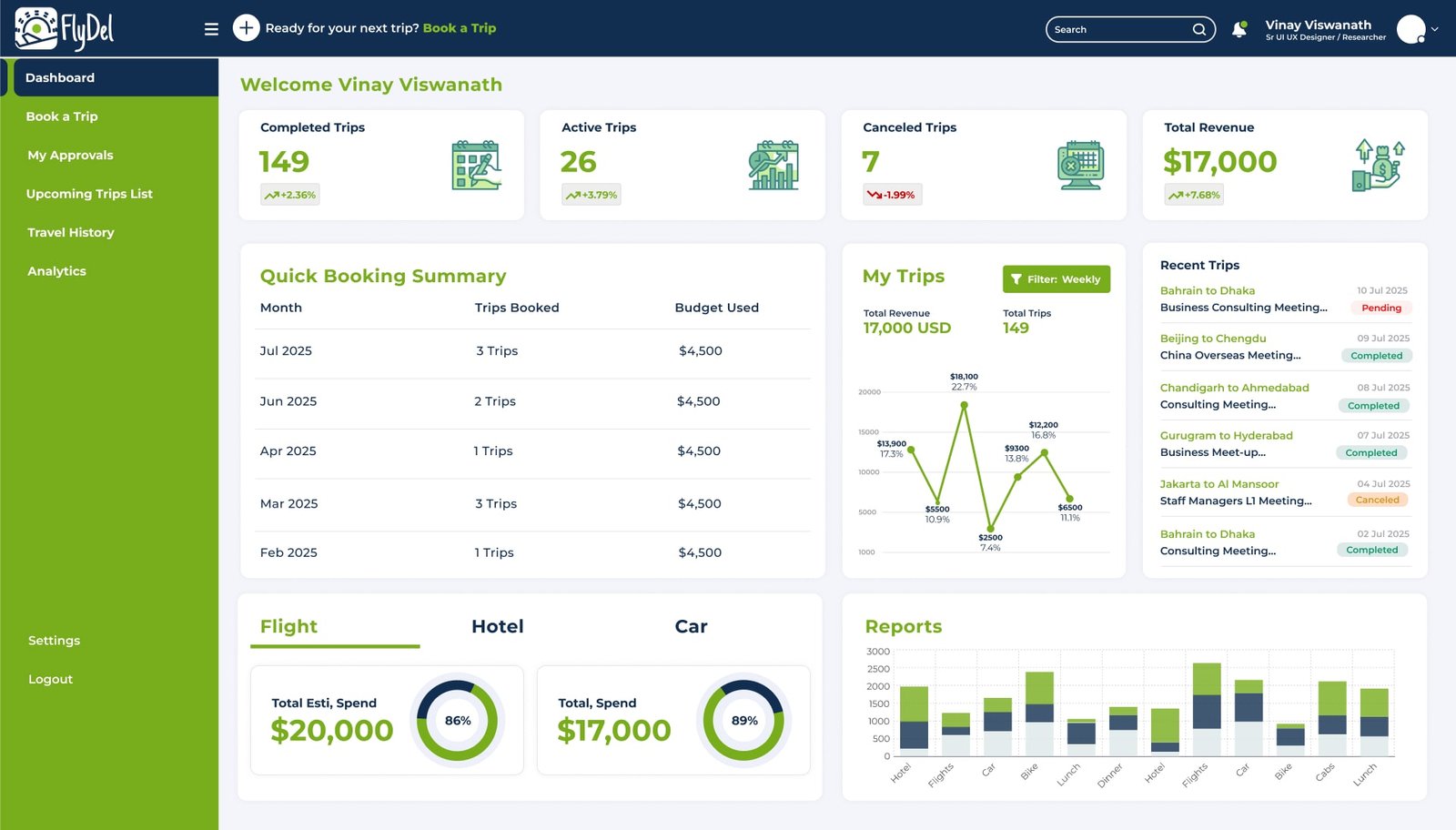
- Budget calculator
- Email + app notifications
- Travel desk dashboard (read-only access)
Streamlining Corporate Travel, A Design Thinking Approach
Empowering employees, easing travel desk load
This presentation outlines a design thinking approach to empower employees to manage their corporate travel bookings efficiently, reducing the burden on the internal travel desk.
The Current State of Corporate Travel
A global medium-sized company faces a growing challenge with corporate travel.
Employees frequently travel for various reasons, including:
- Visiting international branches
- Attending sales meetings and client engagements
- Participating in conferences and training sessions
Problem Statement Enabling Self-Service
How might we empower employees to manage their own flight and hotel bookings efficiently, while ensuring streamlined manager approvals and keeping the travel desk informed without overwhelming existing systems?
Employee Booking
Employees initiate their travel requests.
Manager Approval
Travel plans are submitted to managers for swift approval.
Travel Desk Notification
The travel desk is informed post-approval for record-keeping and support.
Phase 1
Empathize
The company aims to empower employees to book their own flights and hotels, significantly reducing the travel desk's involvement.
Objective
Understand user pain points and business needs..
Understanding User Needs
Interviews:
Speak with employees (all levels) and travel desk personnel.
Journey Mapping:
Visualize current booking processes from all perspectives.
Pain Points:
Identify specific frustrations and bottlenecks.
Surveys:
Surveys for frequent travelers.
Key Insights
- Employees want flexibility in bookings.
- Managers want visibility and approval control.
- Travel desk is bogged down with repetitive tasks.
- Approvals vary by employment level (Level 1 vs Manager).
Phase 2
Defined Problem
Employees lack an efficient, autonomous system to manage travel bookings, while managers and the travel desk need to maintain control and oversight without manual overhead.
User Personas
Level 1 Employee:
Needs manager approval and clear budget guidance.
Manager:
Can self-book and approves team requests..
Travel Desk Agent:
Needs visibility, not manual work.
Phase 3
Ideation
Brainstorm Solutions
Generate a wide range of ideas for a new booking system, from simple forms to integrated platforms.
- Generate a wide range of ideas for a new booking system, from simple forms to integrated platforms.
- Self-service travel portal for booking flights and hotels.
- Role-based approval workflows (auto for managers, manual for level 1).
- Automated notification system to inform travel desk.
- Budget calculator based on employment level and location.
- Mobile-friendly interface for on-the-go approvals.
Develop Prototypes
Create low-fidelity (sketches) to high-fidelity (interactive) prototypes of the proposed solution.
User Flow Design
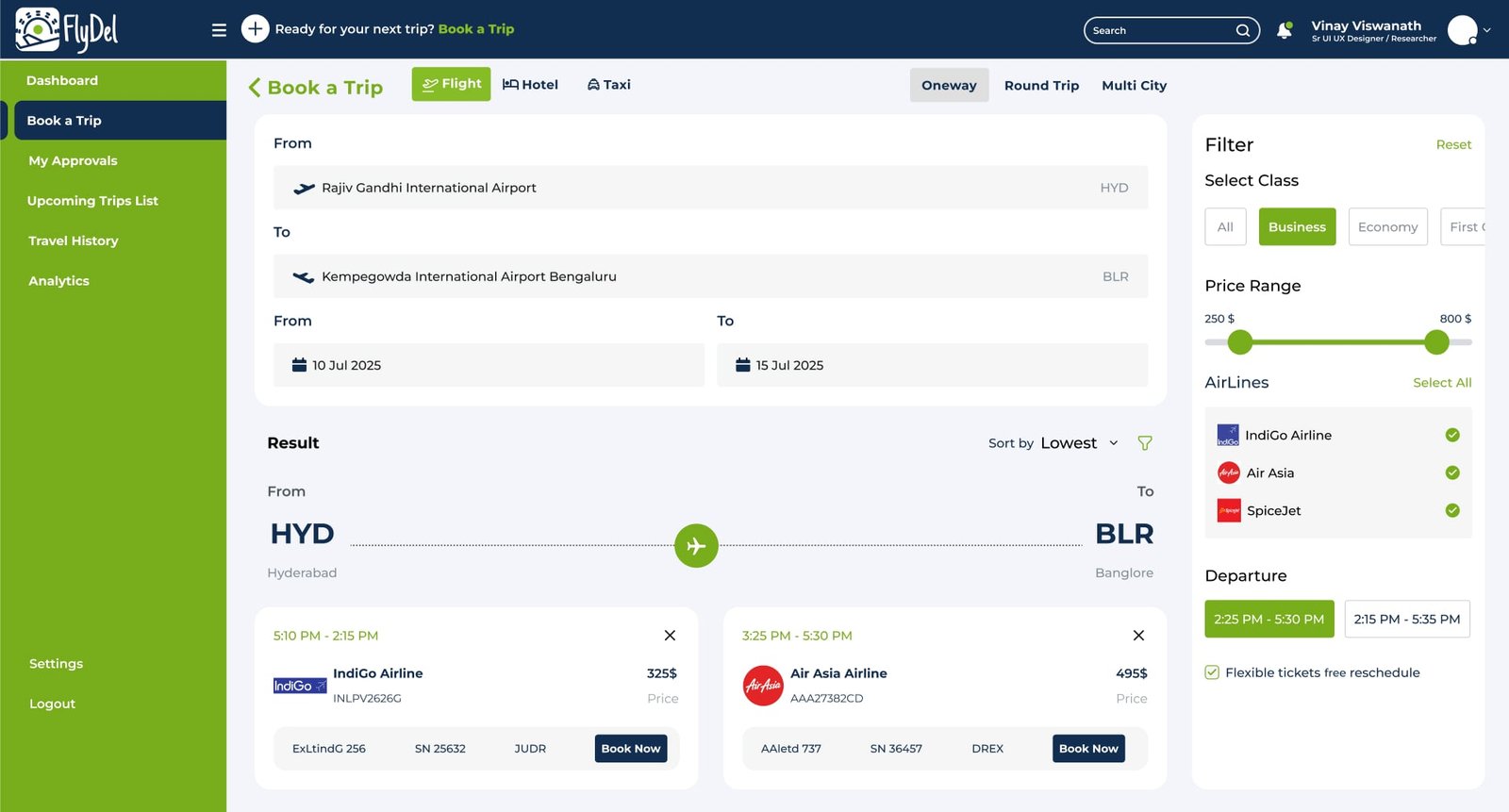
Map out the entire process: search, selection, manager approval, and travel desk notification.
Phase 4
Prototyping
Low-Fidelity Prototypes
- Travel booking request form
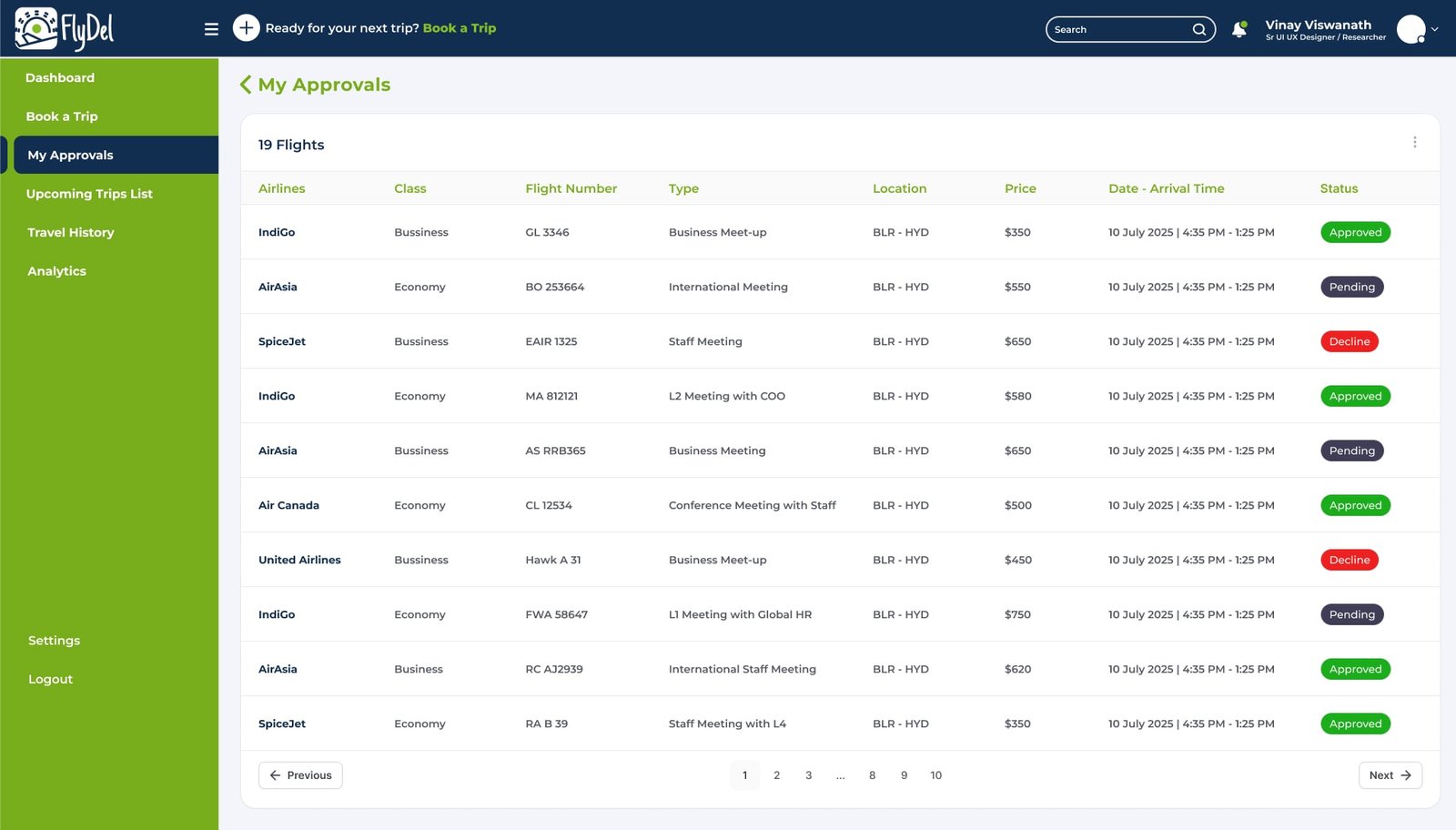
- Approval workflow mock-up (email or in-app notification)
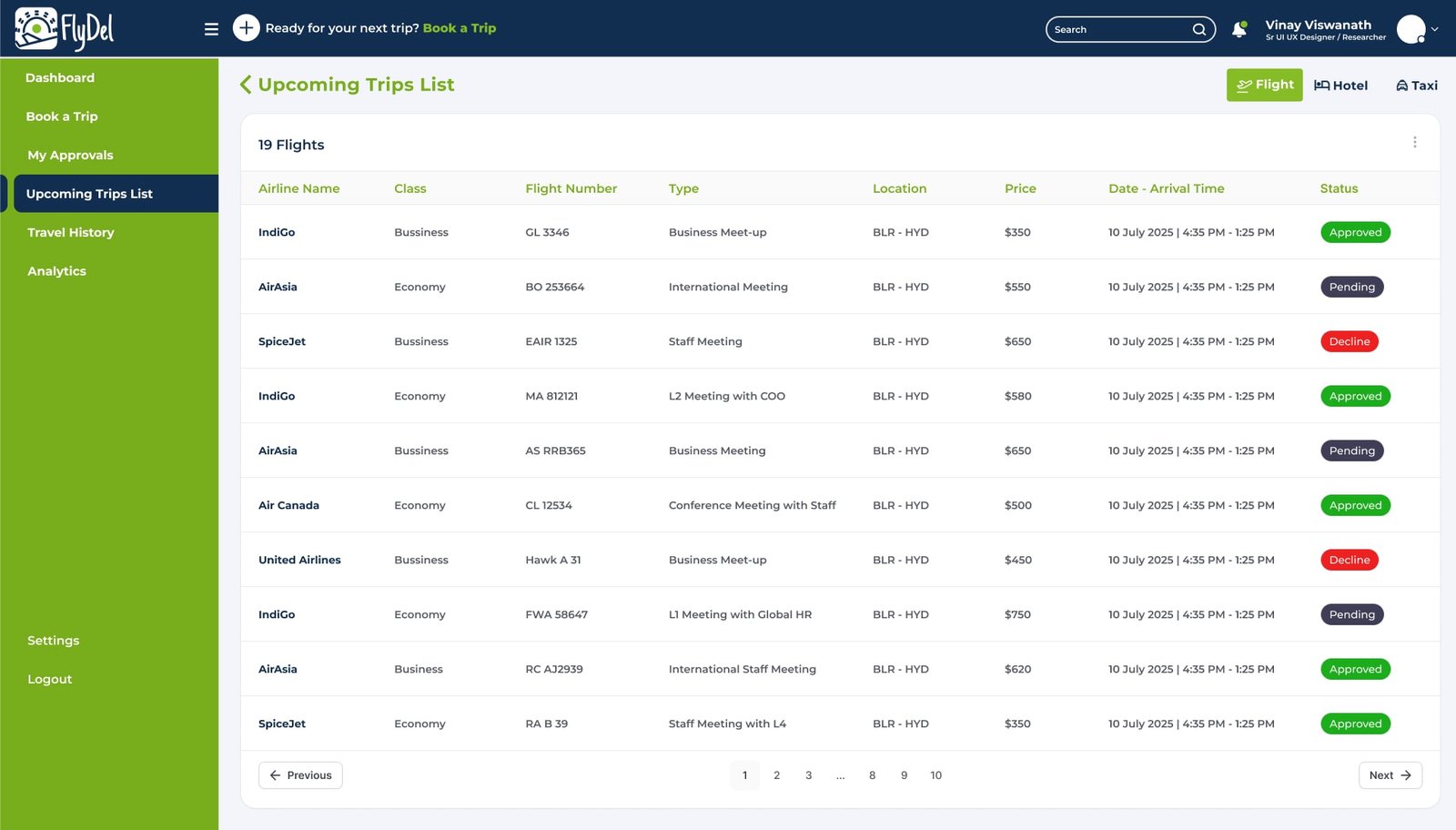
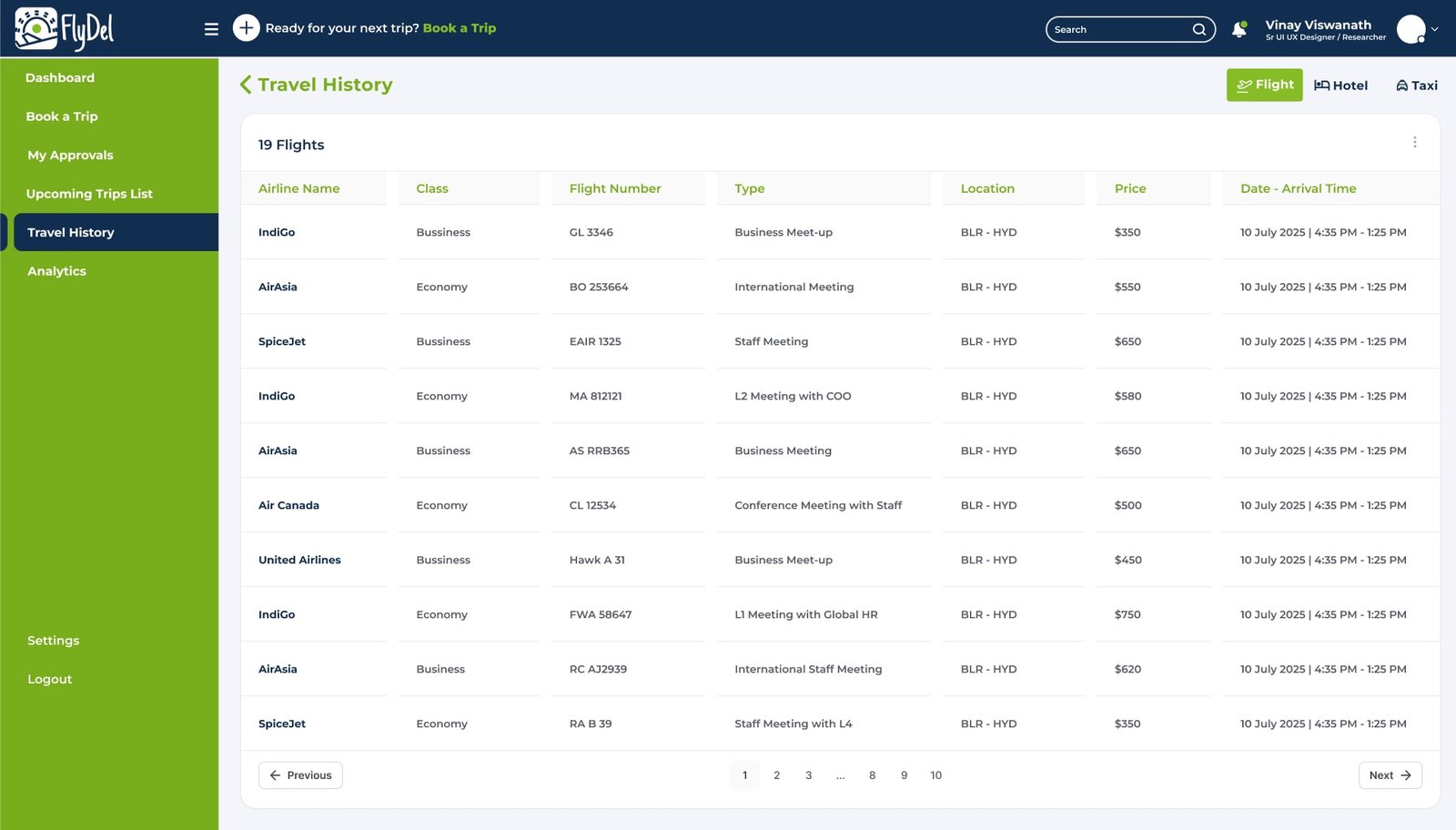
- Dashboard for travel desk visibility
- Budget display by employee level
Key Features
- Flight & hotel search engine integration
- Approval prompts for restricted bookings (e.g., business class)
- Auto-routing to managers based on org hierarchy
Develop Prototypes
Create low-fidelity (sketches) to high-fidelity (interactive) prototypes of the proposed solution.
User Flow Design
Map out the entire process: search, selection, manager approval, and travel desk notification.
Phase 5
Testing & Iteration
User Testing with:
- 3 Employees from different levels
- 2 Managers
- 1 Travel desk agent
User Testing
Conduct usability tests with a diverse group of employees and travel desk staff to gather feedback.
Iterate & Refine
Based on feedback, refine the portal's features, interface, and approval workflows.
Pilot Program
Launch a pilot with a small group of users to ensure smooth operation and gather real-world data.
Full Rollout
Implement the refined travel portal company-wide, supported by training and documentation.
Refinement
- Added real-time status tracker
- Integrated budget calculator into booking page
- Created automated PDF summary for travel desk
Feedback Highlights
- Loved the auto-budget display
- Requested a “status” tracker for trip approval
- Travel desk wanted a read-only booking summary
Final Proposed Solution
Smart Corporate Travel Portal
The company aims to empower employees to book their own flights and hotels, significantly reducing the travel desk's involvement.
Key Features:
Policy Enforcement:
Automated checks for travel class based on employee level.
Budget Adherence:
Real-time budget tracking and alerts.
Manager Dashboard:
Easy approval/rejection of requests with clear details.
Travel Desk Interface:
Overview of all bookings, reporting, and intervention points.
Benefits
- Reduces travel desk workload by 60%
- Speeds up booking approvals by 3x
- Empowers employees with autonomy
- Ensures compliance with policy
Conclusion
Design Thinking enabled us to humanize the travel process, align with business goals, and build a scalable solution that benefits everyone involved.
Secondary Research
Secondary Research: Employee Travel Portal
Why Secondary Research?
We use secondary research to gather and analyze existing data or insights that were originally collected by others. It helps in understanding a problem, validating ideas, or gaining background knowledge without starting from scratch.
01: Market Trends in Corporate Travel
- Global Business Travel Spending is projected to reach $1.4 trillion by 2026, according to GBTA (Global Business Travel Association).
- The rise of “Self-Service Corporate Travel” is a key trend; companies are moving away from centralized travel desks toward employee-driven platforms like SAP Concur, TravelPerk, and Navan.
- 64% of companies are adopting hybrid travel management, blending automation with manual support (Skift 2024).
- Duty of Care Compliance is crucial—employers must track where employees are, ensure they travel within safe zones, and stick to budget policies.
02: User Behavior & Expectations
Employees Expect:
- Simple, consumer-like UI similar to Booking.com or MakeMyTrip
- Role-based controls (e.g., cannot book business class if entry-level)
- Budget visibility while searching
- Mobile-first experience (60% of corporate travel planning now starts on mobile)
Managers Expect:
- Quick trip summaries for approvals
- Contextual decisions (e.g., “why business class?”)
- Ability to approve/decline directly from email or app
Travel Desk Staff Need:
- Visibility, not manual entry
- Auto-generated summaries for compliance/audit
- Tools to spot exceptions quickly
03: Competitor Benchmarking
Platform
● Sap Concur
● TravelPerk
● Navan (TripActions)
● Egencia
Key Features
● Full travel + expense integration
● Instant booking, approval workflows
● Role-based policy enforcement, Slack approvals
● Owned by American Express, strong reporting
Notes
● Enterprise-focused, high setup cost
● Modern UX, great for mid-sized companies
● Strong UX, expanding globally
● Older UI, more suitable for large corps
04: Relevant Statistics
- 68% of companies are moving to self-service travel tools (Top Leading Companies).
- 3 out of 4 corporates use external integrations (SAP, HRMS).
- 80% of travel policy violations happen due to lack of visibility.
- 82% of companies saw productivity gains when shifting to self-service booking platforms.
- 73% of employees say they are more satisfied when they can manage their own travel within policy limits.
- 60% of travel desk staff report reduced workload when approvals and booking summaries are automated.
- 75% of managers want mobile-based approval flows.
- Average corporate travel budget per trip, Domestic: $200 – $500 and International: $800 – $1500 (depending on level).
05: Design Justification Using Research
Design Decision
- Role-based UI (Level 1 vs Manager)
- Budget display before booking
- Auto-approval for managers
- Real-time approval tracking
- Mobile-first design approach
Research Backing
- Benchmark from TravelPerk and Navan
- 68% of users prefer budget awareness upfront
- Found in 3 of 4 benchmarked platforms
- TravelPerk and SAP Concur both show request lifecycle
- 60% of corporate users initiate bookings via mobile
Visual Designs
Years of Experience
Case Studies
Web & Graphic Designs
I truly appreciate his talent. He is quick learner and good at any task, best of luck Vinay.
Saibaba Aindayal | Ybrant Digital
He is the kind of person who delivers what is promised to the business on time. Vinay has a very strong understanding on UI/UX DESIGNER (creative designer), and he plays a senior role in his candidature.
I wish Vinay to more successful journey in his career. Good luck
Mohd Khalid Pasha | Ingresos
He is a strong advocate for the user-centered design process and promotes data-driven decisions. Vinay was our biggest champion when it came to expanding design’s role within the organization, and he did so with eloquent diplomacy.
Vinay is truly unique, and I am thankful for the opportunity to have worked with him.
Siva Prakash Kadapa | CriticalRiver Technologies
Working with him was always smooth—he listens, collaborates, asks the right questions, and brings thoughtful solutions to the table. I’ve seen him take complex problems and turn them into clean, intuitive experiences that make both users and clients happy.
What really sets Vinay apart is his ability to think beyond screens—he’s always looking at the full journey, making sure the product doesn’t just look good but feels right too. If you’re building a product and want someone who blends creativity, strategy, and empathy, Vinay is someone you definitely want on your team.
Shekhar Tipparapu
What really sets Vinay apart is his systemic mindset. He doesn’t just design screens; he designs frameworks: reusable component libraries, clearly-documented design tokens, and Gen-AI-powered idea boards that help the squad iterate at lightning speed. More than once I’ve seen him turn a fuzzy problem statement into an interactive prototype—and usable research findings—overnight. It’s no surprise he earned the internal “Rock Star Award”; his deliverables routinely cut development rework and accelerated release timelines.
Just as important, Vinay is a generous teammate. He mentors junior designers on heuristics and storytelling, runs spontaneous Figma “show-and-tell” sessions, and jumps into cross-functional huddles whenever a roadblock appears. If you need someone who can own the end-to-end UX process, inspire a room, and still roll up his sleeves, hire him—you’ll see the difference on day one.
Soni Kodati | CriticalRiver Technologies
His work has received accolades from the client and I remember giving him employee of the quarter too.
He is very prompt and accountable. I look forward to working with him again. Good luck .
Sambasiva Rao Chaganti | COO Fint Solutions